How might we assist deafblind runners to navigate?

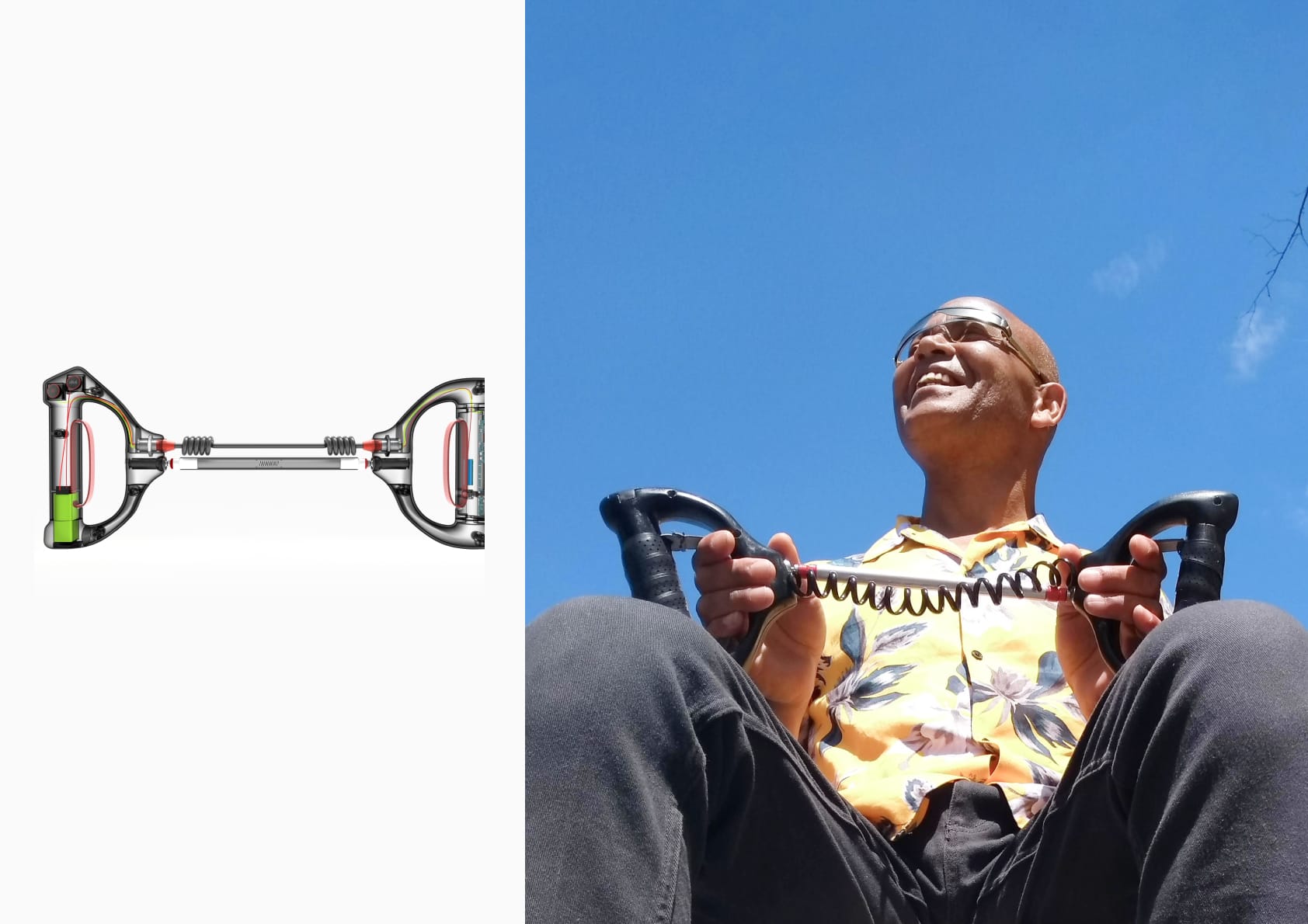
Equarun is used to help deafblind people (especially those suffering from Usher Syndrome, a progressive disorder affecting more than 400,000 people worldwide) and their guides engage in safe and comfortable long-distance running.
This device is capable of transmitting complex instructions on road conditions, striking a good balance between freedom and safety.
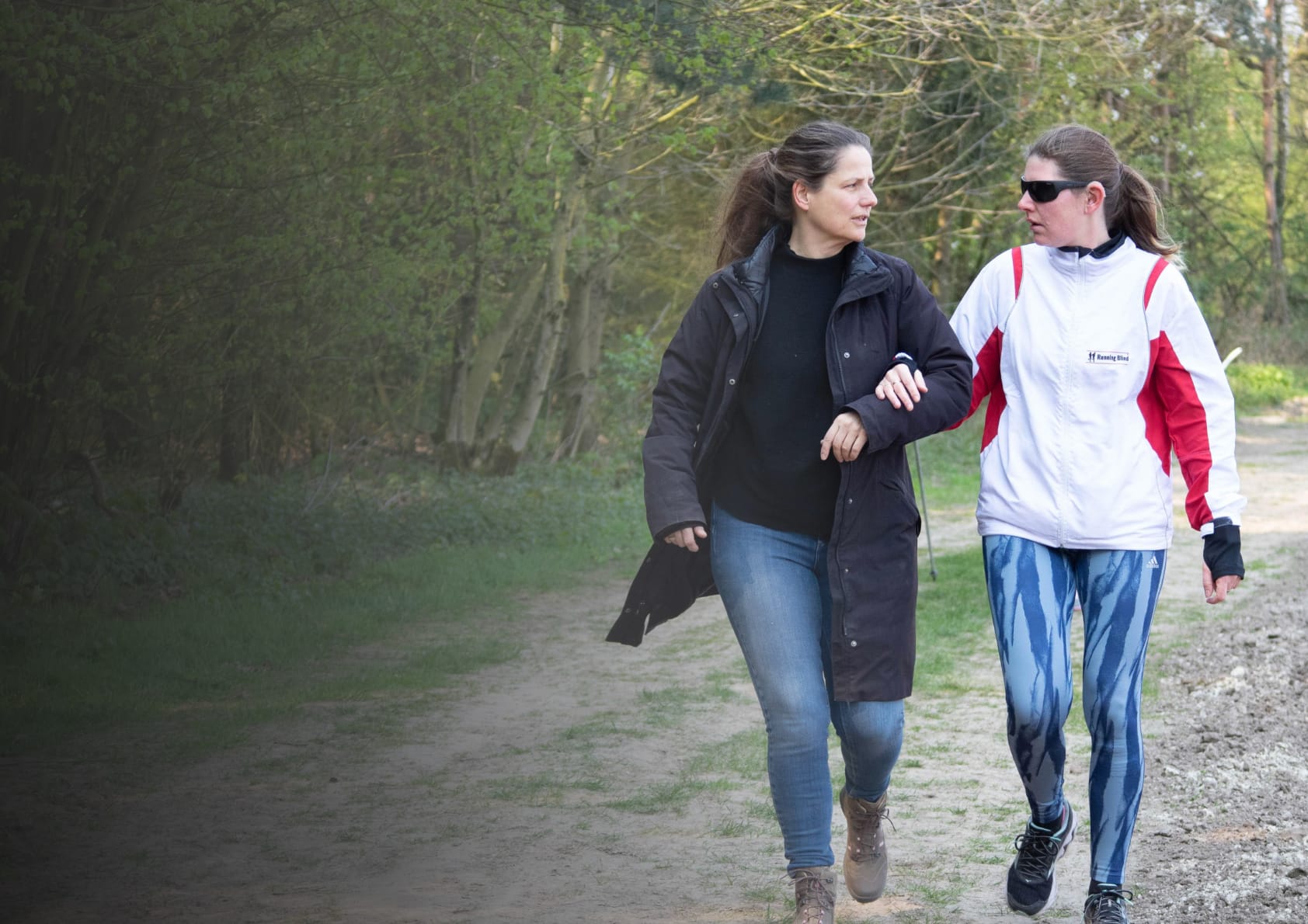
Equarun being used across running tracks, crowded public spaces and even outdoor tracks within forests.
Roles and responsibilities
As a design engineer and project manager, I was responsible for two main roles:
- To conduct design tests in the form of weekly agile sprints to unravel insights from a very sensitive user group— deaf-blind runners
- Translate research insights into product requirements and eventually, embodiment design improvements. I was also responsible for designing the embedded system including the haptic system (PCB)
- Managing tight timelines to go from concept-to-launch within 6 months from product discovery to pilots with end users. Led 12+ Design Tests to resolve usability issues and designed the electronics architecture
- Paper publication at the International Conference on Engineering and Product Design Education, Denmark
Usher Syndrome affects nearly 10,000 people worldwide in the form of acquired deaf-blindness. Imagine losing your senses gradually.
How would that feel? For some of the Ushers, their vision gets clouded similar to the gradient I have overlayed on top of this image.
Running is often suggested as a form of therapy to allow the Ushers to cope with the anxiety and stress of losing their senses.
But how do they run across forests, race tracks or even marathons with ease?
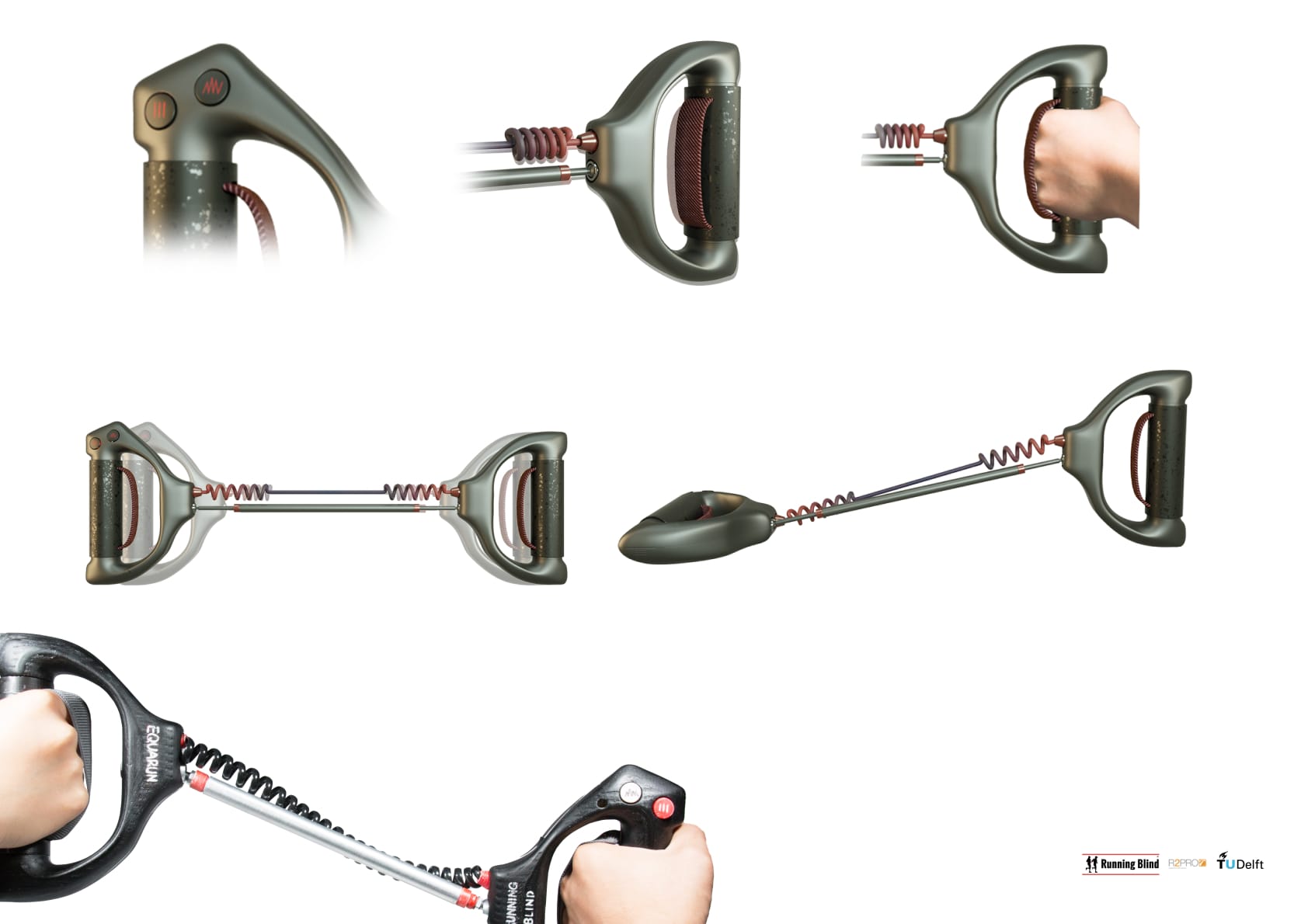
A robust, intuitive device to support deaf-blind runners with safe, long distance running
Equarun consists of a haptic actuator system that allows communicating the terrain information allowing the runners to run across race tracks, forests and crowded spaces.
The embodiment is designed in such a way it doesn’t affect the running gait (posture) of both the runners.
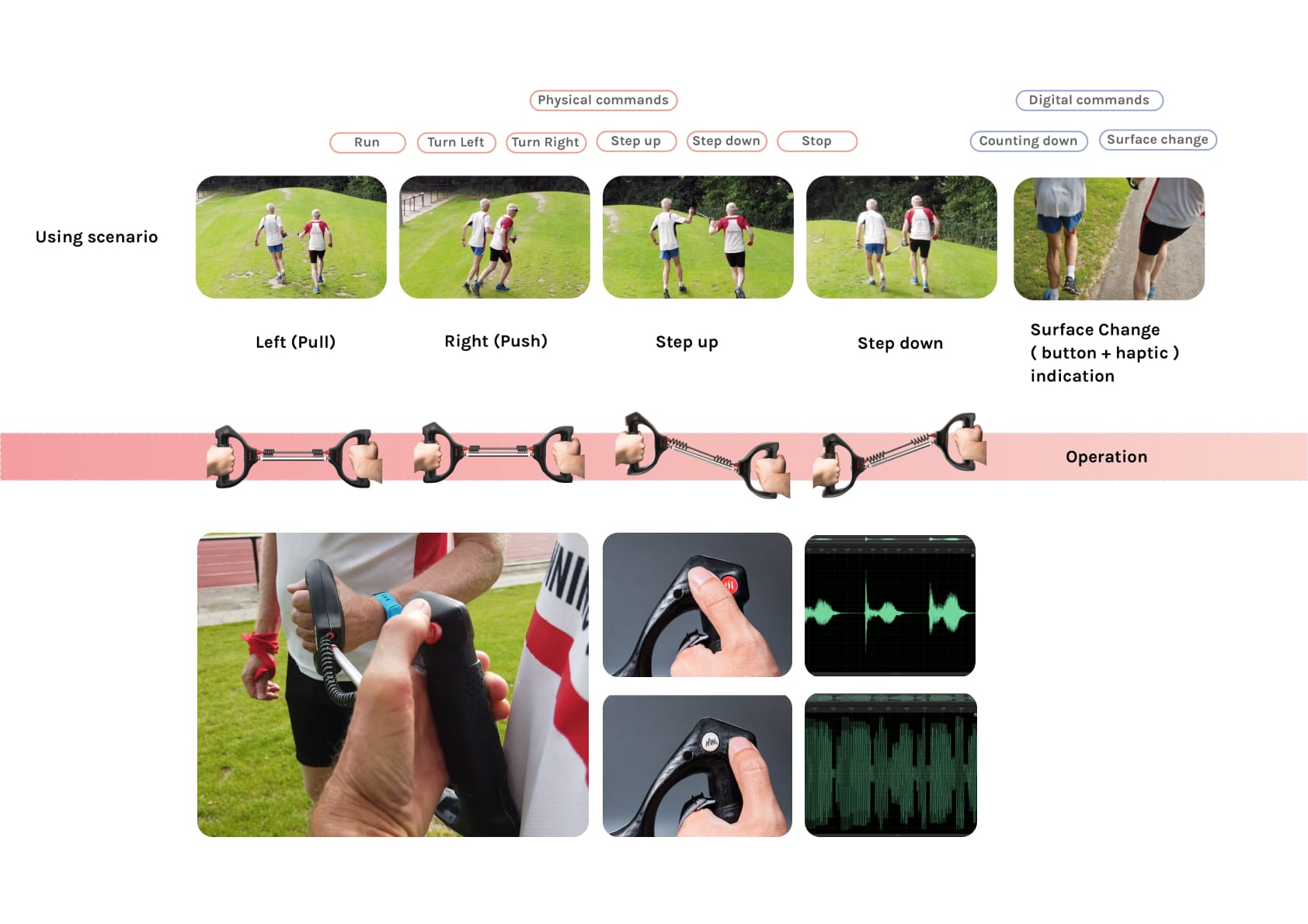
With the principle of ‘As less design as possible’, we didn’t overpopulated the interface with too many buttons.
All the essential instructions for navigation was easy to follow with the physical structure and some advanced commands were communicated by means of haptics.
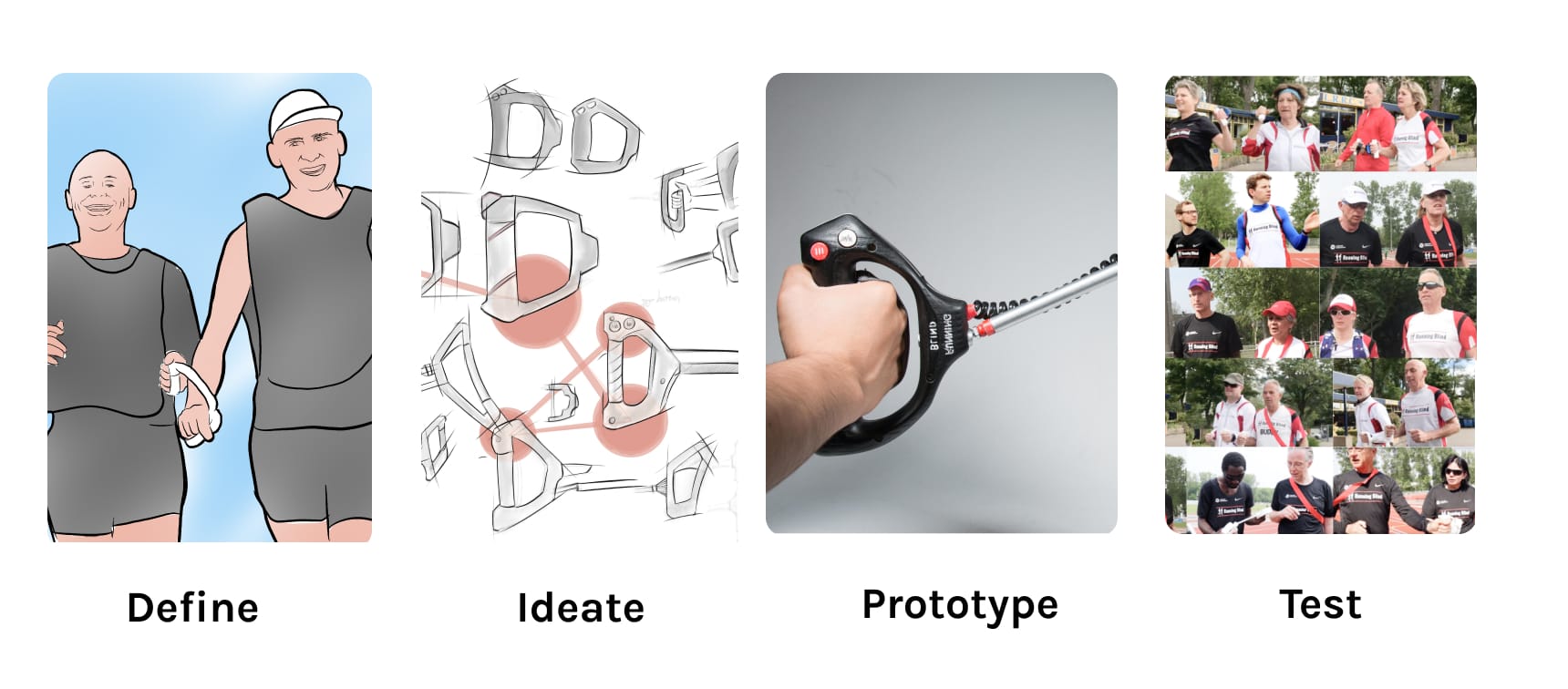
If you notice up close, the ‘Empathise’ stage in the standard design cycle didn’t come upfront. That was because empathizing was not just a stage in the process but was cultivated throughout the process of iteration and product development.
Over six months, we followed the methodology of action research to get weekly insights from the runners through a series of design sprints. These knowledge loops were lead by empathy.
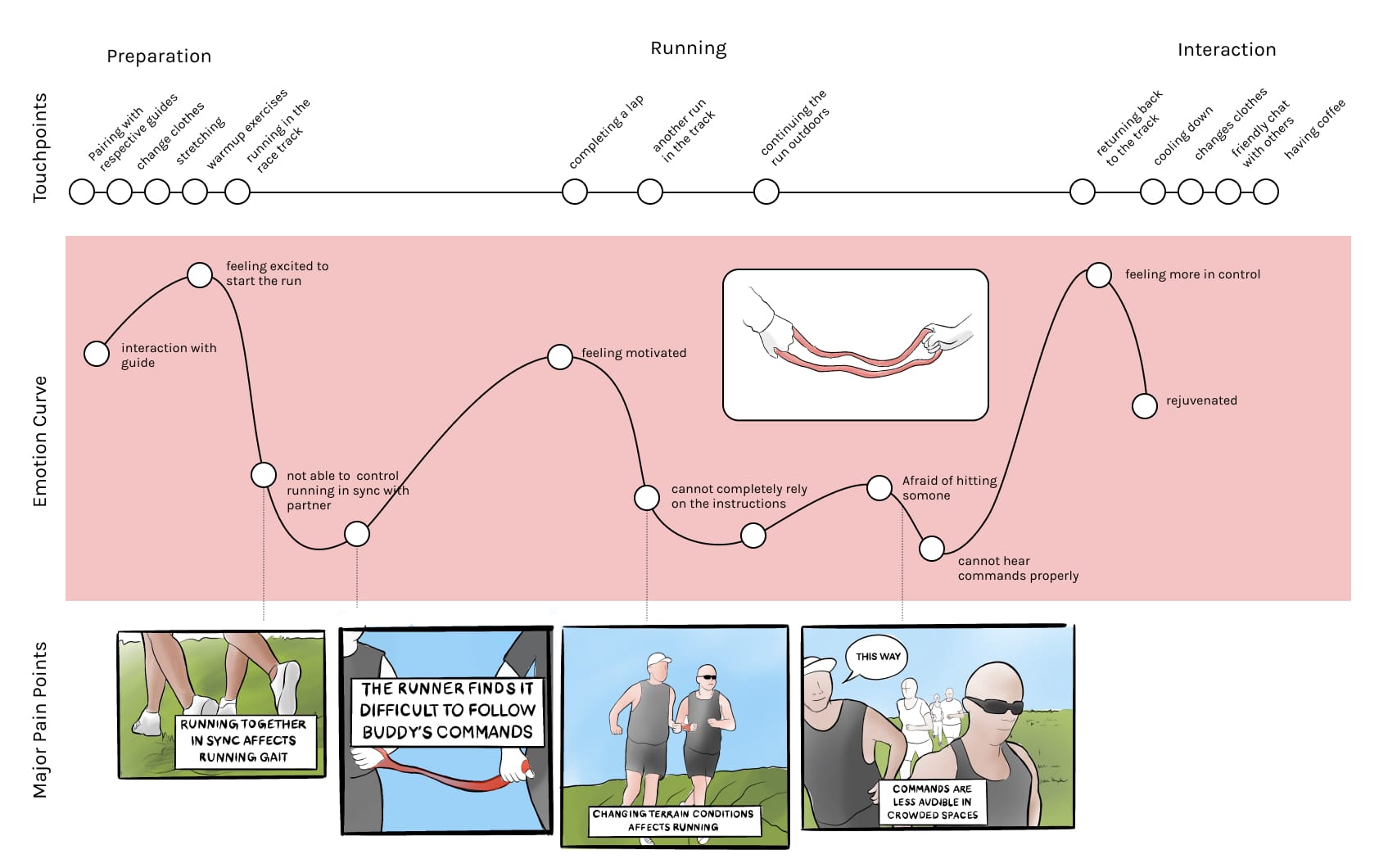
User personas were detailed. How does a day in the life of a buddy or the Usher look like? Currently the buddies use a cotton strap to provide commands to the ushers.
Ideation
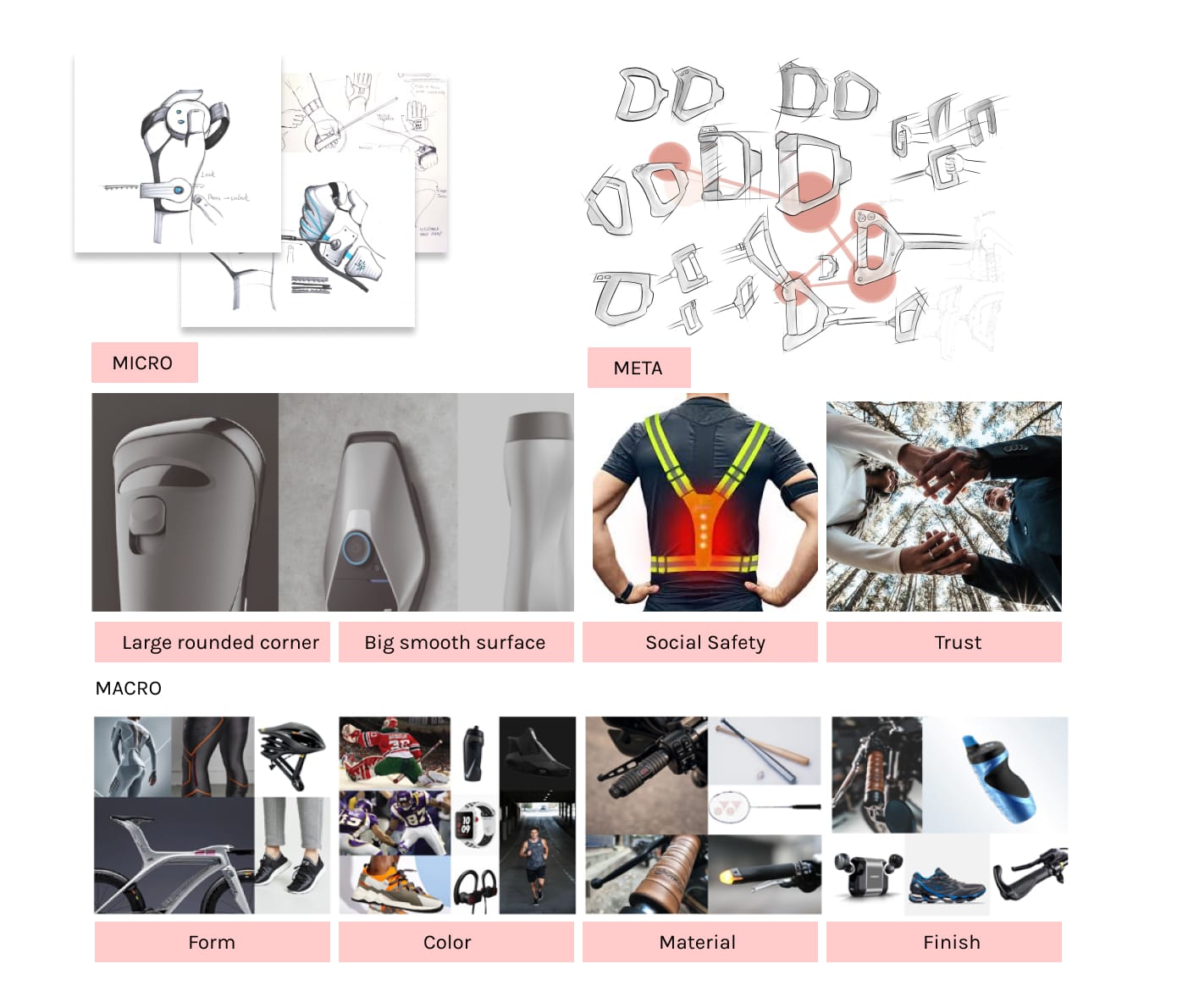
After analysing the pain points, a variety of concepts for assisted running were explored.
After selecting one of the concepts based on the program of criteria, certain micro, macro and meta experiences were charted out to help define the product experience better.
In this way, the form and the function went hand in hand in the final selection of the concepts.
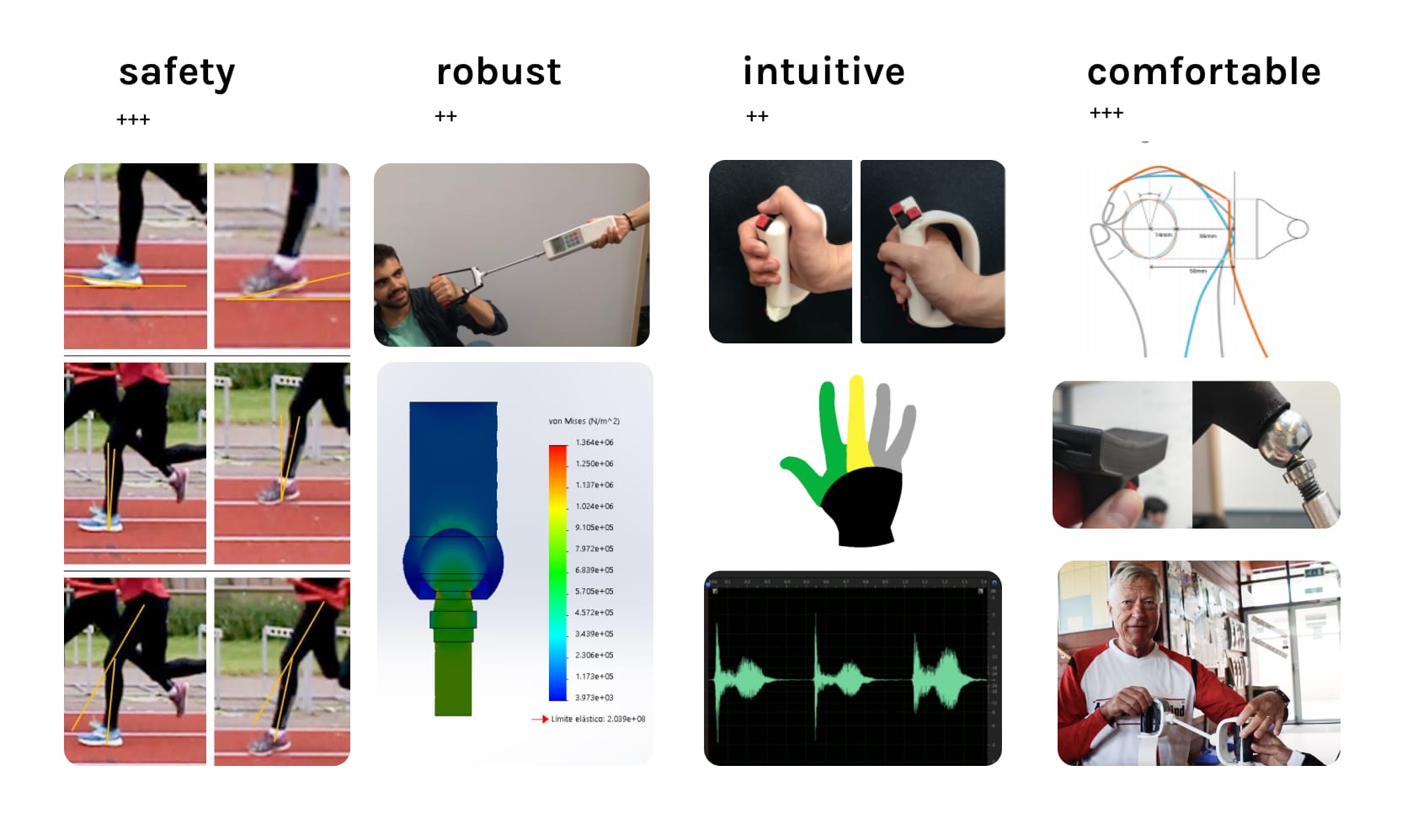
Running gait analysis was conducted among 15 participants to influence the impact of the device on the foot landing, the knee window and the arm flexion. Concepts were shortlisted based on findings.
Primarily as a sports device, the material and the structure had to be robust. FEA analysis was conducted to ensure that the product withstands push/pull.
The instructions had to be intuitive for the deafblind runners to understand and navigate. Ergonomic analysis of the position of buttons and usability tests were conducted to shortlist haptics
While running long distances, comfort is key and an ergonomic evaluation using (System Usability Scale) was performed to select the size, material and thickness of the handle.
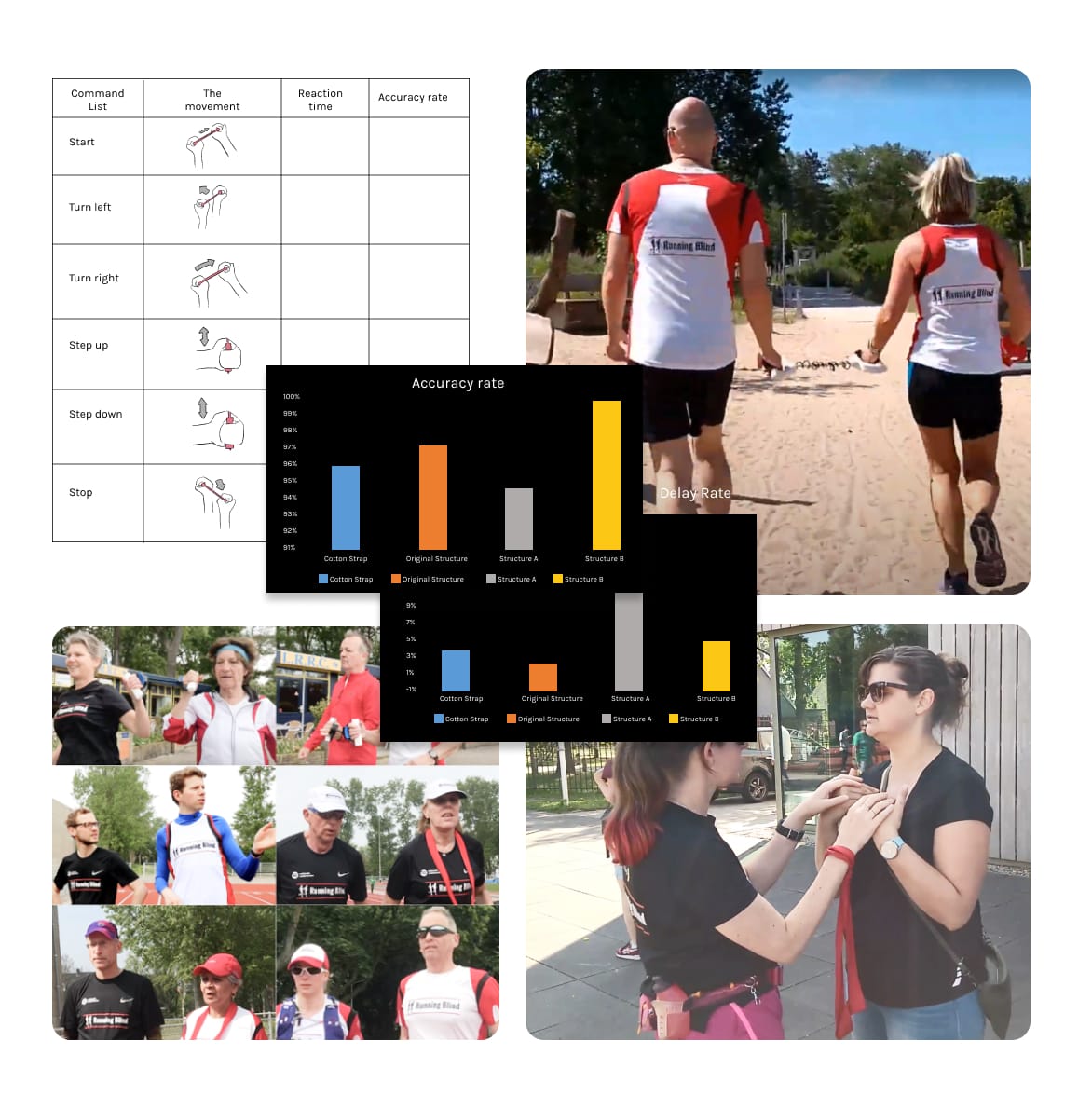
Action research and testing
In order to understand if there has been any improvement in the accuracy rate and reaction time of participants while using the device, a comparative test was carried out with various structures.
30 deaf and blind runners along with their guides participated in these design tests. To get qualitative insights from the deafblind runners, a translator helped us understand how they experienced using the device. Along with this, the quantitative results proved the effectiveness of the final device.
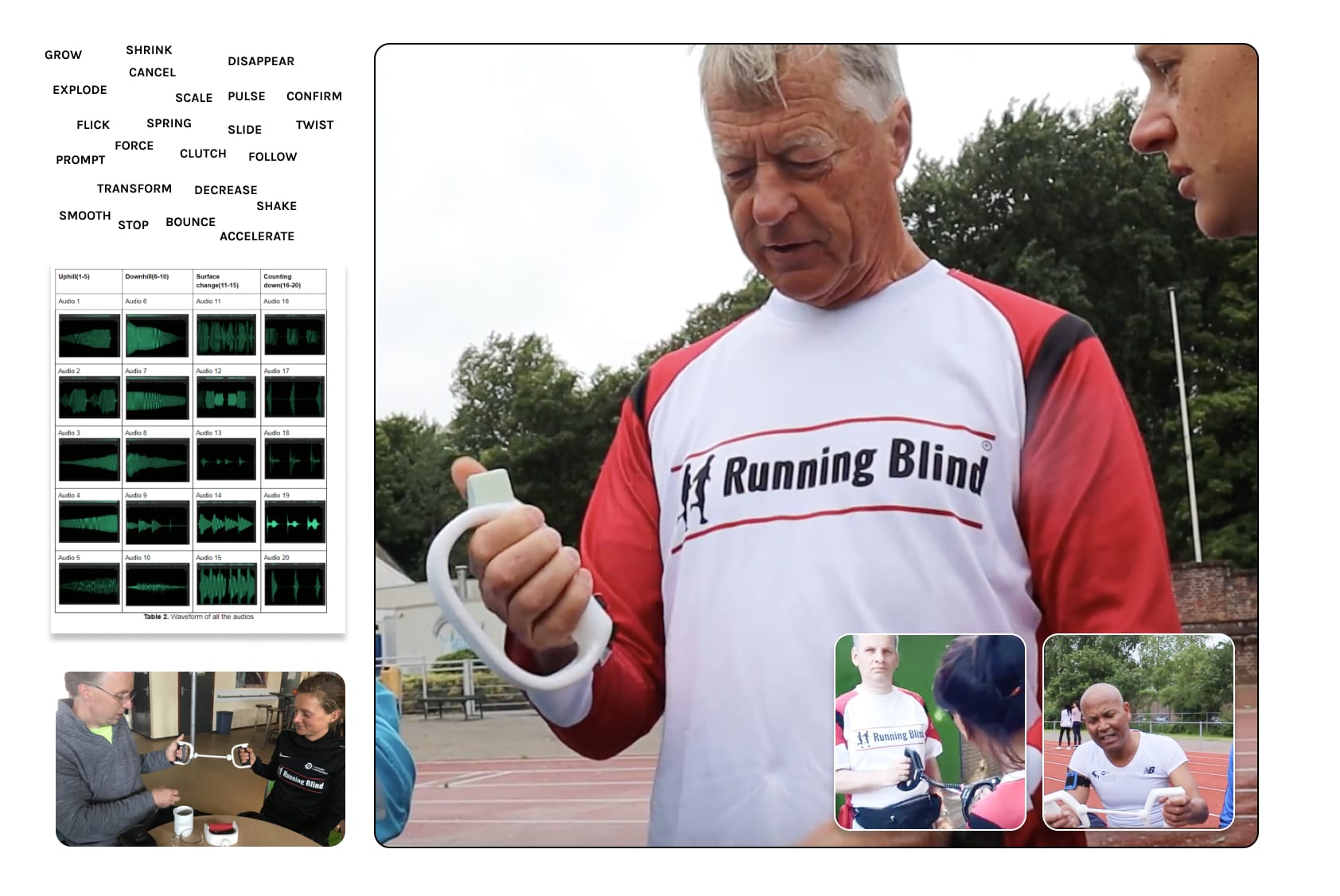
Designing a haptic language for running
A validation study was done with 3 blind runners as participants. This was used to finalize the waveforms for the commands that indicate ‘Surface change’ and the ‘Counting down’ option.
A general questionnaire was made to gather general data about the intuitiveness of the haptics on keywords such as ‘stop, pause, follow etc’.
This was then used to shortlist waveforms to be tested by the deafblind participants.
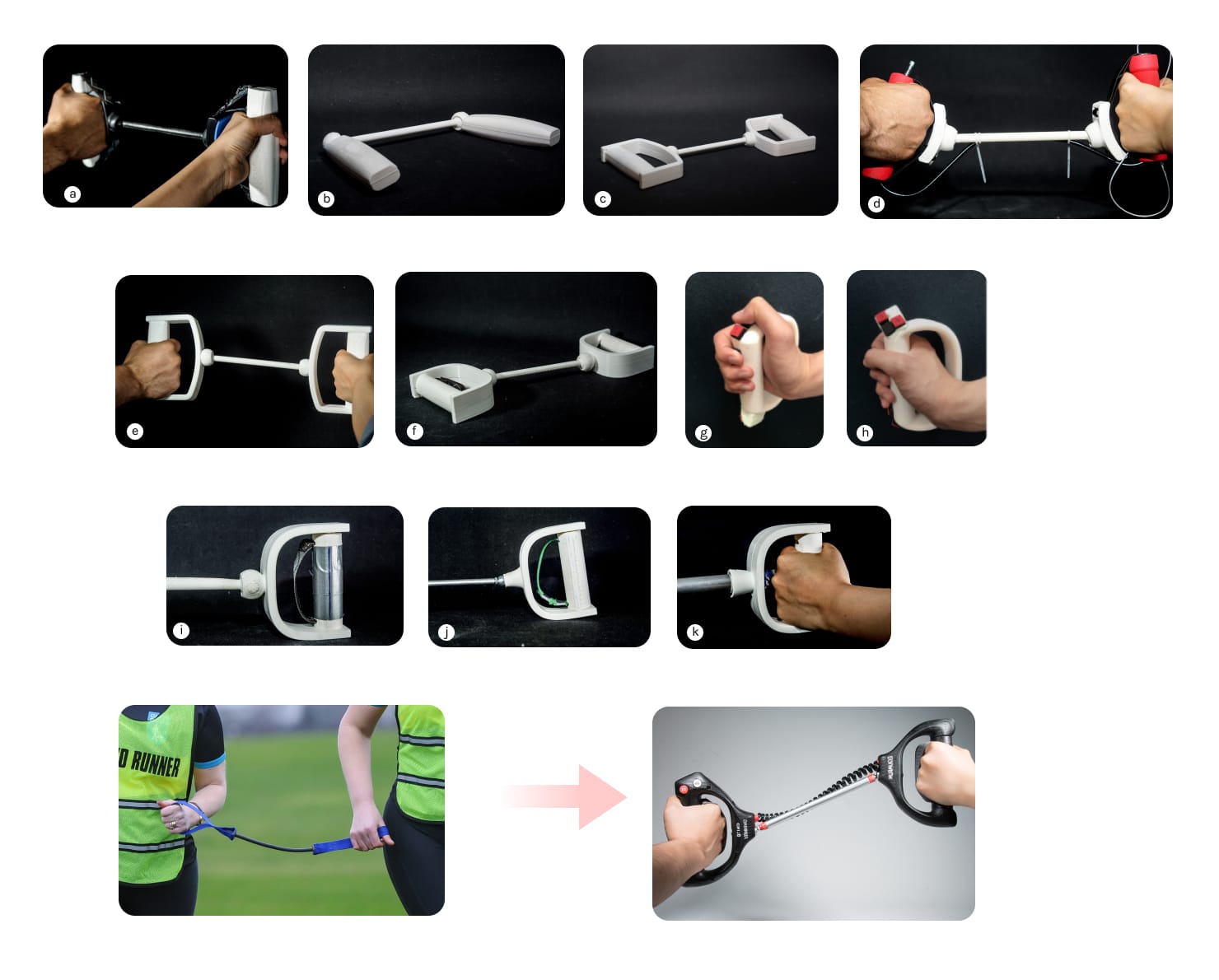
Improvement through iteration
The following iteration map showcases the evolution of the product and its transition from a cotton strap.
a, b, c and d were different structural configurations tested.
e, f, g and h were various embodiment improvements made. i, j and k ere various adjustments to include more comfort to the runners.
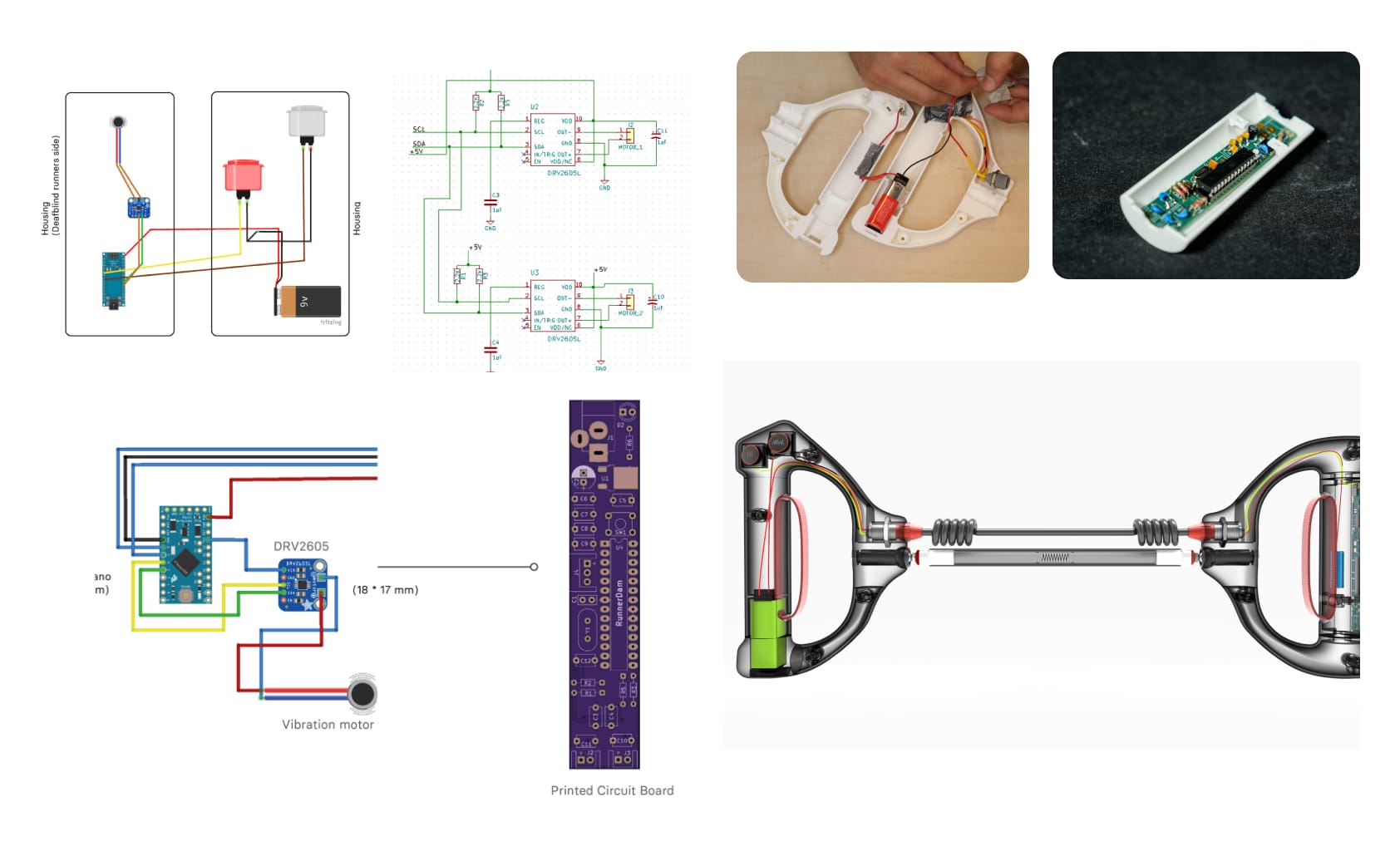
The electronics architecture designed evolved from a simple Arduino nano prototype to a neatly fitting PCB snug-fitting into the housing of the handle. Apart from this, several iterations were made to minimise inter-wiring operations reducing the error rate.
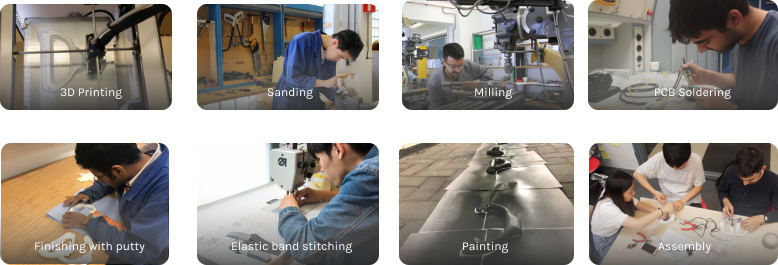
For the first batch of 40 units, as per the client requirements, an assembly instruction diagram was created. The design was optimised according to standard parcel dimensions for shipping to bring the cost down to 210 euros.
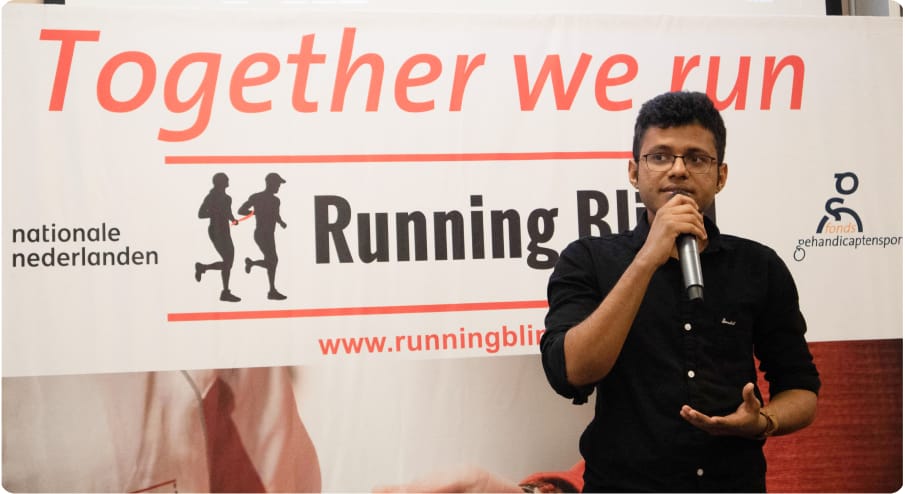
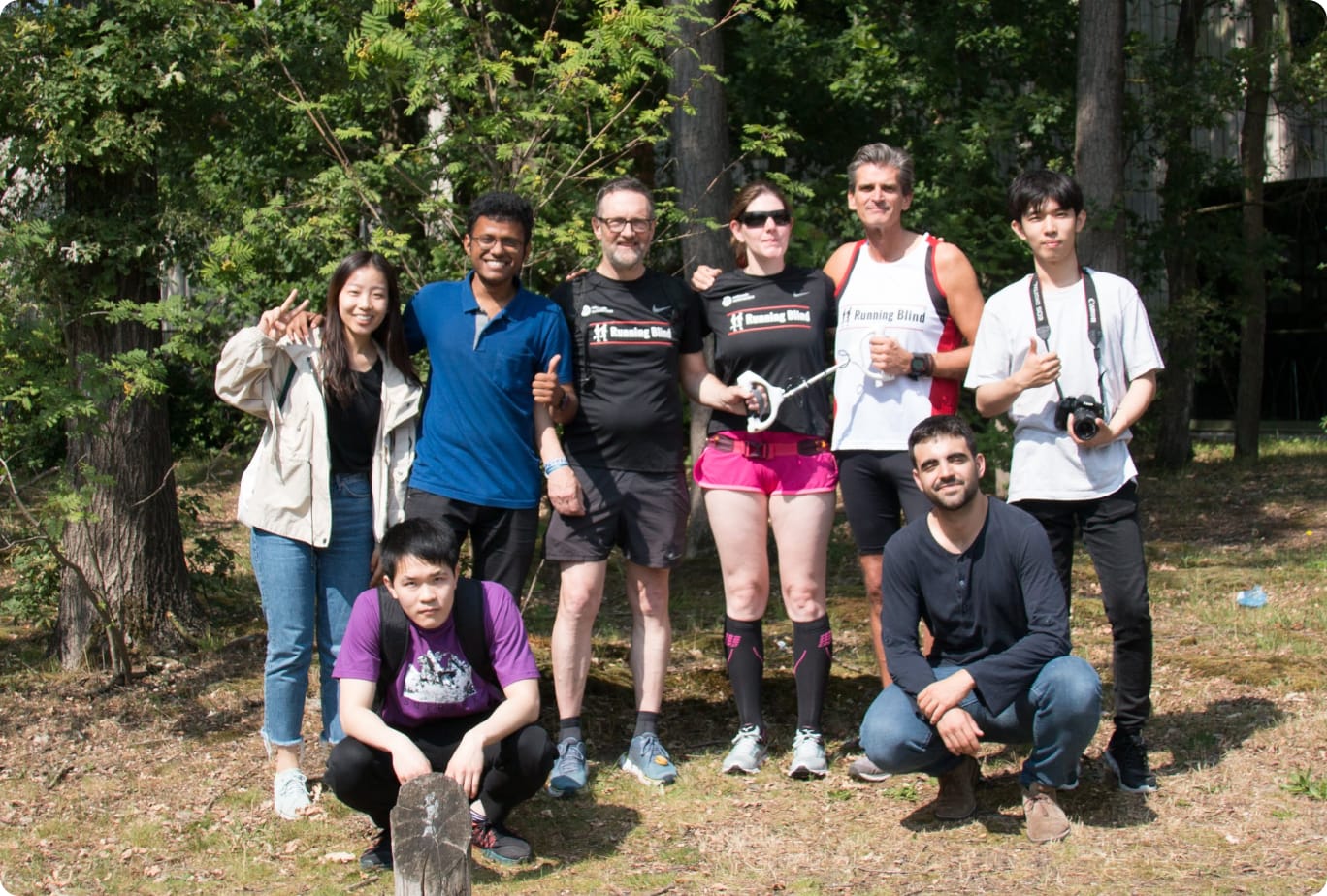
Apart from the product development, I also spread awareness on improving the safety of running to a group of 150 Ushers from the Netherlands.
I also participated in marathons and became more closer to this community through the design process.
On reflection, I realised that advocacy was as important as the design itself to launch a product into the market.
Read more
- Home is where the feeling of home residesreflections
- Notes on doing most good, doing some good, and living goodphilanthropy
- Notes on Londontravel
- 18 key ideas from reading Henrik Karlsson this monthwriting
- Venn-diagram based decision makingmathematics
- Co-creative loops are everywheremental-models
- Life lessons and hot takes from my 30slifestyle
- Building a skill for coherent science illustrationsscience
- My agentic engineering workflow (step by step)agentic-coding
- Hammock driven developmentagentic-coding
- Peculiar ways number three fits into our funny little brainsmental-models
- AI sandwich as a defacto principle for anything agentic engineering relatedagentic-coding
- Authority in the guise of evidencecritical-rationalism
- Map is not the territoryphilosophy
- Self hypnosis as a manifestation ritualmeditation
- Hegelian dialectic for structured reasoning with AI agentsphilosophy
- How I prepare for tough negotiations nowadaysnegotiation
- When should we steelthread somethingproduct-development
- Breadboarding, shaping, slicing, and steelthreading solutions with AI agentsproduct
- Healthy conflict in teams have a tipping pointteam-building
- How I deslopify AI writingwriting
- How I started building softwares with AI agents being non technicalagentic-coding
- Read raw transcriptswriting
- Legible and illegible tasks in organisationsproduct
- L2 Fat marker sketchesdesign
- Writing as moats for humanswriting
- Beauty of second degree probesdecision-making
- Boundary objects as the new prototypesprototyping
- One way door decisionsproduct
- Finished softwares should existproduct
- How I periodically rank my rough draftsobsidian
- Flipping questions on its headinterviewing
- Vibe writing maximswriting
- How I blog with Obsidian, Cloudflare, AstroJS, Githubwriting
- How I build greenfield apps with AI-assisted codingagentic-coding
- We have been scammed by the Gaussian distribution clubmathematics
- Classify incentive problems into stag hunts, and prisoners dilemmasgame-theory
- I was wrong about optimal stoppingmathematics
- Thinking like a shipmental-models
- Hyperpersonalised N=1 learningeducation
- New mediums for humans to complement superintelligenceagentic-coding
- Maxims for AI assisted codingagentic-coding
- Virtual bookshelvesaesthetics
- It's computational everythingtrends
- Public gardens, secret routesdigital-garden
- Git way of learning to codeagentic-coding
- Style Transfer in AI writingagentic-coding
- Understanding codebases without using codeagentic-coding
- Vibe coding with Cursoragentic-coding
- Virtuoso Guide for Personal Memory Systemsmemory
- Writing in Future Pastwriting
- Publish Originally, Syndicate Elsewhereblogging
- Poetic License of Designdesign
- Idea in the shower, testing before breakfastsoftware
- Technology and regulation have a dance of ice and firetechnology
- How I ship "stuff"software
- Writing is thinkingwriting
- Song of Shapes, Words and Pathscreativity
- How do we absorb ideas better?knowledge
- Read writers who operatewriting
- Brew your ideas lazilyideas
- Trees, Branches, Twigs and Leaves — Mental Models for Writingwriting
- Compound Interest of Private Noteswriting
- Conceptual Compression for LLMsagentic-coding
- Meta-analysis for contradictory research findingsdigital-health
- Proof of workproduct
- Gauging previous work of new joinees to the teamleadership
- Task management for product managersproduct
- Beauty of Zettelswriting
- Stitching React and Rails togetheragentic-coding
- Exploring "smart connections" for note takingwriting
- Deploying Home Cooked Apps with Railssoftware
- Repetitive Copypromptingwriting
- Questions to ask every decadejournalling
- Balancing work, time and focusproductivity
- Hyperlinks are like cashew nutswriting
- Brand treatments, Design Systems, Vibesdesign
- How to spot human writing on the internetwriting
- Can a thought be an algorithm?product
- Opportunity Harvestingcareers
- Everything is a prioritisation problemproduct
- Nowlifestyle
- How I do product roastsproduct
- The Modern Startup Stacksoftware
- In-person vision transmissionproduct
- How might we help children invent for social good?social-design
- The meeting before the meetingmeetings
- Design that's so bad it's actually gooddesign
- Lessons learnt interview prepping for product rolesinterviewing
- Obsessing over personal websitessoftware
- English is the hot new programming languagesoftware
- Better way to think about conflictsrisk-management
- The role of taste in building productsdesign
- Dear enterprises, we're tired of your subscriptionssoftware
- Products need not be user centereddesign
- World's most ancient public health problemsoftware
- Pluginisation of Modern Softwaredesign
- Let's make every work 'strategic'consulting
- Making Nielsen's heuristics more digestibledesign
- Startups are a fertile ground for risk takingentrepreneurship
- Insights are not just a salad of factsdesign
- Minimum Lovable Productproduct
- Methods are lifejackets not straight jacketsmethodology
- How to arrive at on-brand colours?design
- Minto principle for writing memoswriting
- Importance of Whytask-management
- Quality Ideas Trump Executionsoftware
- Why I prefer indie softwareslifestyle
- Use code only if no code failscode
- Self Marketing
- Personal Observation Techniquesdesign
- Design is a confusing worddesign
- A Primer to Service Design Blueprintsdesign
- Rapid Journey Prototypingdesign
- Visualise detailed file structures on CLIcli
- Do's and Don'ts of User Researchdesign
- Design Manifestodesign
- Complex project management for productproducts
- How might we enable patients and caregivers to overcome preventable health conditions?digital-health
- Pedagogy of the Uncharted — What for, and Where to?education
- Future of Equity with Ludovick Petersinterviewing
- Future of Ageing with Mehdi Yacoubiinterviewing
- Future of Tacit knowledge with Celeste Volpiinterviewing
- Future of Mental Health with Kavya Raointerviewing
- Future of unschooling with Che Vanniinterviewing
- Future of Rural Innovation with Thabiso Blak Mashabainterviewing
- Future of work with Laetitia Vitaudinterviewing
- How might we prevent acquired infections in hospitals?digital-health
- The why to endure any howentrepreneurship
- Design education amidst social tribulationsdesign