Exploring "smart connections" for note taking

Not starting with a blank slate has been a great productivity boost in my writing. I wrote 50K words in 2024. And I can safely say that these 50K words have been written in a well thought manner, instead of an AI generated word salad.
All this, because I’ve been exploring this neat little plugin called as Smart Connections on Obsidian. It is a tool, and I wouldn’t be naive enough to say that tools don’t matter. This tool allows for two main affordances:
- The ability to ask questions and find answers sourced from your own documents.
- The ability to make ‘smart connections’ across documents.
The strongest reason why this obscure plugin has changed my life is because of the ability to make semantic search possible.
Why does it matter, and why should we care? Let’s deep dive into this.
Previously if I have to write an article about a ‘dog’, I search for the keyword ‘dog’ across all my notes and then find relevant ones. Absorb information from what I’ve written, and then copy paste snippets into the original doc, remixing and rehashing wherever necessary. However, this method fails to recognise that I might have written articles not just about the keyword ‘dog’, but also it’s close cousins.
There might be an article on pets which I might draw some inspiration from. It might even be an article on ‘pet parenting’, or ‘pet food’, or ‘dog walking’, ‘pet walking’. A standard keyword search might not provide me these results. And this leads to them getting deeply buried in the existing pile of notes.
This is where semantic search helps. So what’s the key difference between semantic search and keyword search?
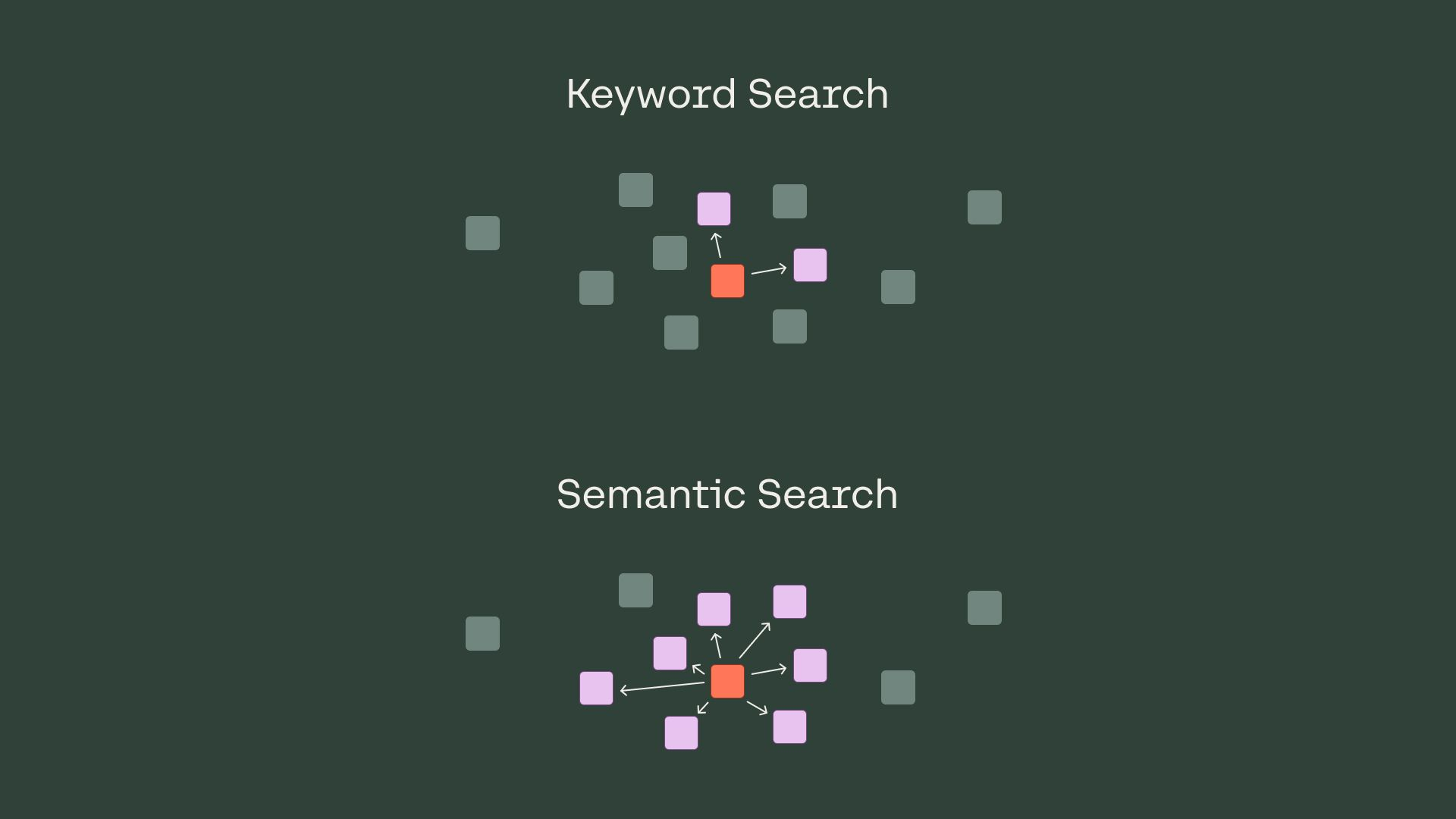
Source: Claude website
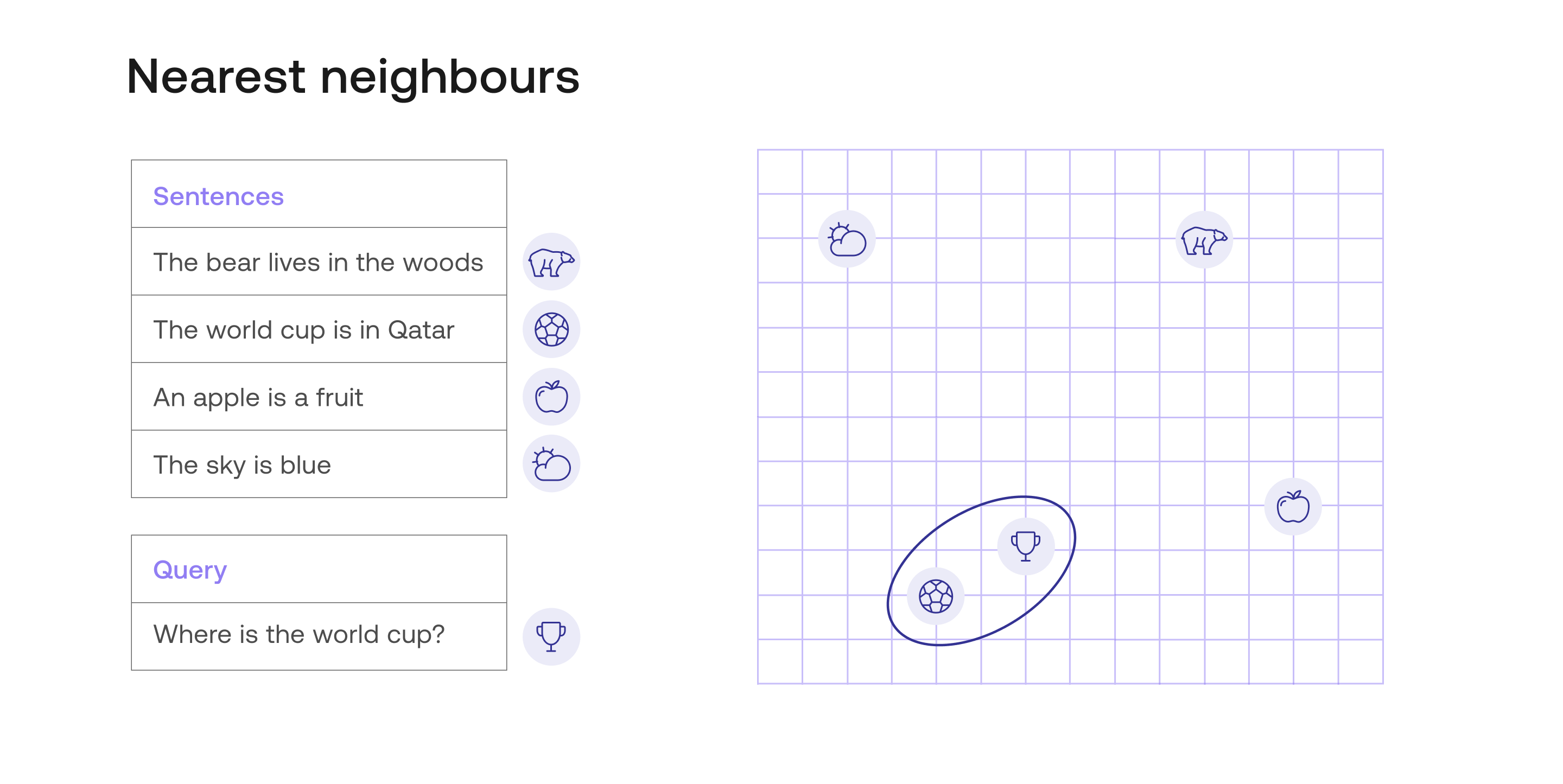
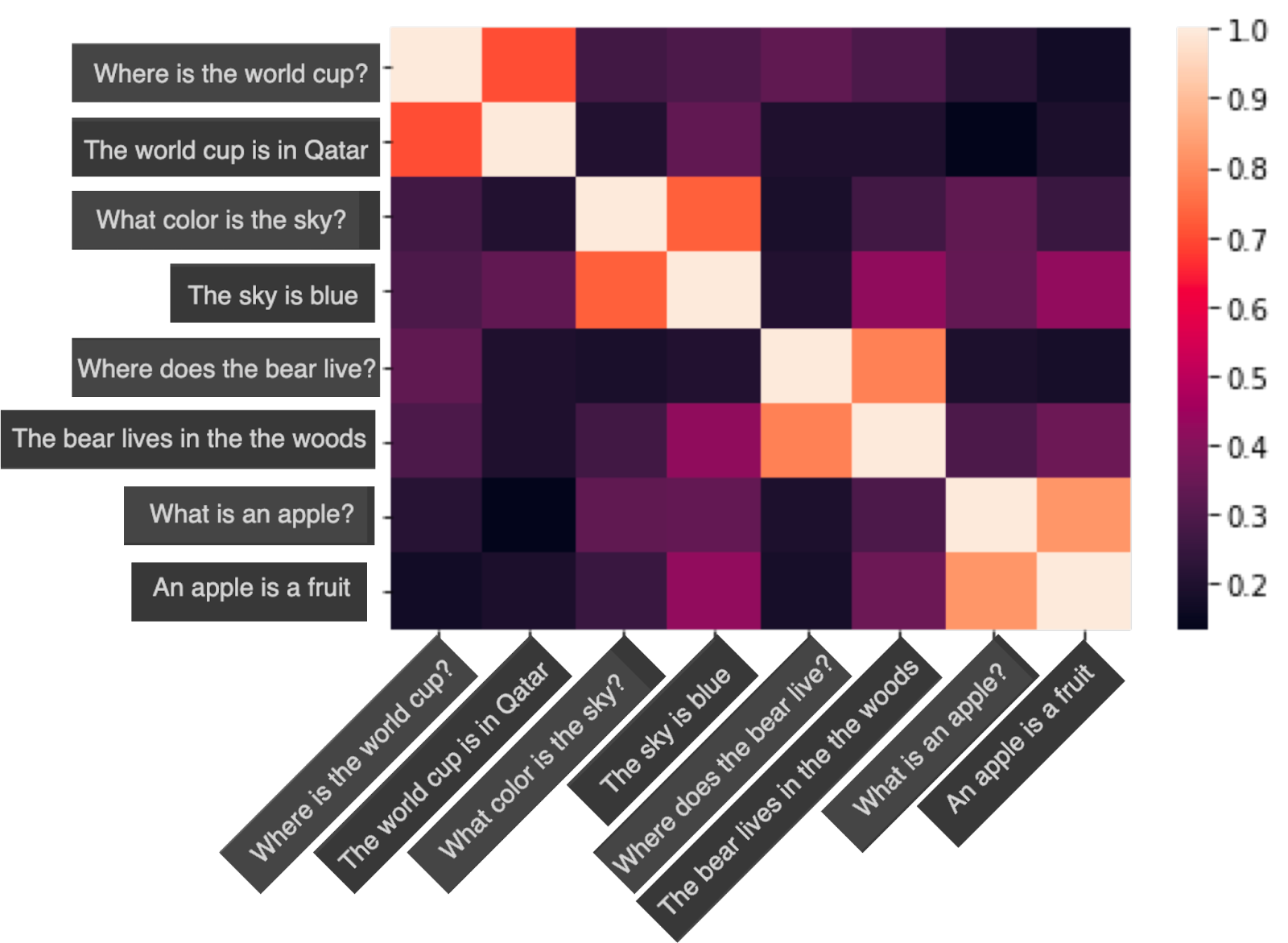
Let’s say we search in our note-taking app — ‘Where is the world cup’. It pulls in notes based on this query. Some of these top queries include:
- The world cup is in Qatar.
- The sky is blue.
- The bear lives in the woods.
- An apple is a fruit.
The reason why this was prioritised this way was because the responses have the following number of words in common with the query. The world cup is in Qatar. (4 words in common) The sky is blue. (2 words in common) The bear lives in the woods. (2 words in common) An apple is a fruit. (1 word in common)
Based on this, the winning response is “The world cup is in Qatar”. However, we’re not always lucky. Let’s say we have this search result — ‘Where in the world is my cup of coffee?’. This response has five words in common with the search query — ‘Where is the world cup’. And it would rank first. Although they are not semantically connected.
Semantic search is helpful to find the nearest neighbours.
Why should I care about semantic search when it comes to note taking? With the rise of LLMs and vector based search, it becomes easier and easier for us to find similar documents and pieces of text. We dont have to type in the exact keyword while searching through documents. We just need to be close enough. And the semantic search would do it’s magic and find all the close cousins. You eliminate the cold start problem of writing with a blank slate.
Even for writing this article, as you could see on the right side, I am able to find notes intelligently connected to my current piece.
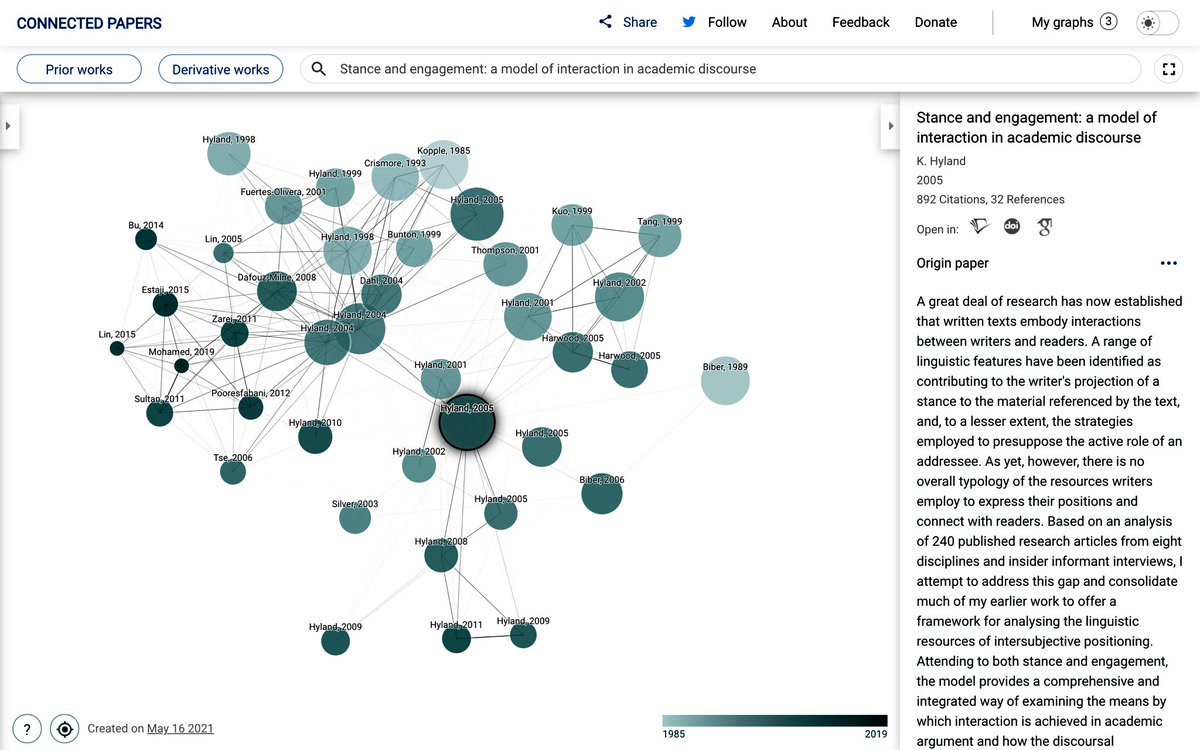
For example, as I’m writing about ‘smart connections’ in general, it is able to connect this with a tweet by Connected Papers, and a relevant book of interest which talks about the same — The Goldilocks Map. It’s even giving me a confidence level of correlation.
The note suggested has 79% similarity with the note I’m writing.
Another use of this plugin is the ability to ask questions based on your internal knowledge (you wouldn’t be able to google this, as this is based on all your personal notes, key insights, wisdom you’ve gained).
You might have already used some of those GPT based PDF chat services. It’s the same, except that this works on all your private notes. For instance:
Notes serve as a source of inspiration and material to build upon, helping jumpstart the writing process. This is how I design my writing environment. With a fertile ground of ideas previously explored.
Read more
- Home is where the feeling of home residesreflections
- Notes on doing most good, doing some good, and living goodphilanthropy
- Notes on Londontravel
- 18 key ideas from reading Henrik Karlsson this monthwriting
- Venn-diagram based decision makingmathematics
- Co-creative loops are everywheremental-models
- Life lessons and hot takes from my 30slifestyle
- Building a skill for coherent science illustrationsscience
- My agentic engineering workflow (step by step)agentic-coding
- Hammock driven developmentagentic-coding
- Peculiar ways number three fits into our funny little brainsmental-models
- AI sandwich as a defacto principle for anything agentic engineering relatedagentic-coding
- Authority in the guise of evidencecritical-rationalism
- Map is not the territoryphilosophy
- Self hypnosis as a manifestation ritualmeditation
- Hegelian dialectic for structured reasoning with AI agentsphilosophy
- How I prepare for tough negotiations nowadaysnegotiation
- When should we steelthread somethingproduct-development
- Breadboarding, shaping, slicing, and steelthreading solutions with AI agentsproduct
- Healthy conflict in teams have a tipping pointteam-building
- How I deslopify AI writingwriting
- How I started building softwares with AI agents being non technicalagentic-coding
- Read raw transcriptswriting
- Legible and illegible tasks in organisationsproduct
- L2 Fat marker sketchesdesign
- Writing as moats for humanswriting
- Beauty of second degree probesdecision-making
- Boundary objects as the new prototypesprototyping
- One way door decisionsproduct
- Finished softwares should existproduct
- How I periodically rank my rough draftsobsidian
- Flipping questions on its headinterviewing
- Vibe writing maximswriting
- How I blog with Obsidian, Cloudflare, AstroJS, Githubwriting
- How I build greenfield apps with AI-assisted codingagentic-coding
- We have been scammed by the Gaussian distribution clubmathematics
- Classify incentive problems into stag hunts, and prisoners dilemmasgame-theory
- I was wrong about optimal stoppingmathematics
- Thinking like a shipmental-models
- Hyperpersonalised N=1 learningeducation
- New mediums for humans to complement superintelligenceagentic-coding
- Maxims for AI assisted codingagentic-coding
- Virtual bookshelvesaesthetics
- It's computational everythingtrends
- Public gardens, secret routesdigital-garden
- Git way of learning to codeagentic-coding
- Style Transfer in AI writingagentic-coding
- Understanding codebases without using codeagentic-coding
- Vibe coding with Cursoragentic-coding
- Virtuoso Guide for Personal Memory Systemsmemory
- Writing in Future Pastwriting
- Publish Originally, Syndicate Elsewhereblogging
- Poetic License of Designdesign
- Idea in the shower, testing before breakfastsoftware
- Technology and regulation have a dance of ice and firetechnology
- How I ship "stuff"software
- Writing is thinkingwriting
- Song of Shapes, Words and Pathscreativity
- How do we absorb ideas better?knowledge
- Read writers who operatewriting
- Brew your ideas lazilyideas
- Trees, Branches, Twigs and Leaves — Mental Models for Writingwriting
- Compound Interest of Private Noteswriting
- Conceptual Compression for LLMsagentic-coding
- Meta-analysis for contradictory research findingsdigital-health
- Proof of workproduct
- Gauging previous work of new joinees to the teamleadership
- Task management for product managersproduct
- Beauty of Zettelswriting
- Stitching React and Rails togetheragentic-coding
- Deploying Home Cooked Apps with Railssoftware
- Repetitive Copypromptingwriting
- Questions to ask every decadejournalling
- Balancing work, time and focusproductivity
- Hyperlinks are like cashew nutswriting
- Brand treatments, Design Systems, Vibesdesign
- How to spot human writing on the internetwriting
- Can a thought be an algorithm?product
- Opportunity Harvestingcareers
- Everything is a prioritisation problemproduct
- Nowlifestyle
- How I do product roastsproduct
- The Modern Startup Stacksoftware
- In-person vision transmissionproduct
- How might we help children invent for social good?social-design
- The meeting before the meetingmeetings
- Design that's so bad it's actually gooddesign
- Lessons learnt interview prepping for product rolesinterviewing
- Obsessing over personal websitessoftware
- English is the hot new programming languagesoftware
- Better way to think about conflictsrisk-management
- The role of taste in building productsdesign
- Dear enterprises, we're tired of your subscriptionssoftware
- Products need not be user centereddesign
- World's most ancient public health problemsoftware
- Pluginisation of Modern Softwaredesign
- Let's make every work 'strategic'consulting
- Making Nielsen's heuristics more digestibledesign
- Startups are a fertile ground for risk takingentrepreneurship
- Insights are not just a salad of factsdesign
- Minimum Lovable Productproduct
- Methods are lifejackets not straight jacketsmethodology
- How to arrive at on-brand colours?design
- Minto principle for writing memoswriting
- Importance of Whytask-management
- Quality Ideas Trump Executionsoftware
- Why I prefer indie softwareslifestyle
- Use code only if no code failscode
- Self Marketing
- Personal Observation Techniquesdesign
- Design is a confusing worddesign
- A Primer to Service Design Blueprintsdesign
- Rapid Journey Prototypingdesign
- Visualise detailed file structures on CLIcli
- Do's and Don'ts of User Researchdesign
- Design Manifestodesign
- Complex project management for productproducts
- How might we enable patients and caregivers to overcome preventable health conditions?digital-health
- Pedagogy of the Uncharted — What for, and Where to?education
- Future of Equity with Ludovick Petersinterviewing
- Future of Ageing with Mehdi Yacoubiinterviewing
- Future of Tacit knowledge with Celeste Volpiinterviewing
- Future of Mental Health with Kavya Raointerviewing
- Future of unschooling with Che Vanniinterviewing
- Future of Rural Innovation with Thabiso Blak Mashabainterviewing
- Future of work with Laetitia Vitaudinterviewing
- How might we prevent acquired infections in hospitals?digital-health
- The why to endure any howentrepreneurship
- Design education amidst social tribulationsdesign
- How might we assist deafblind runners to navigate?social-design